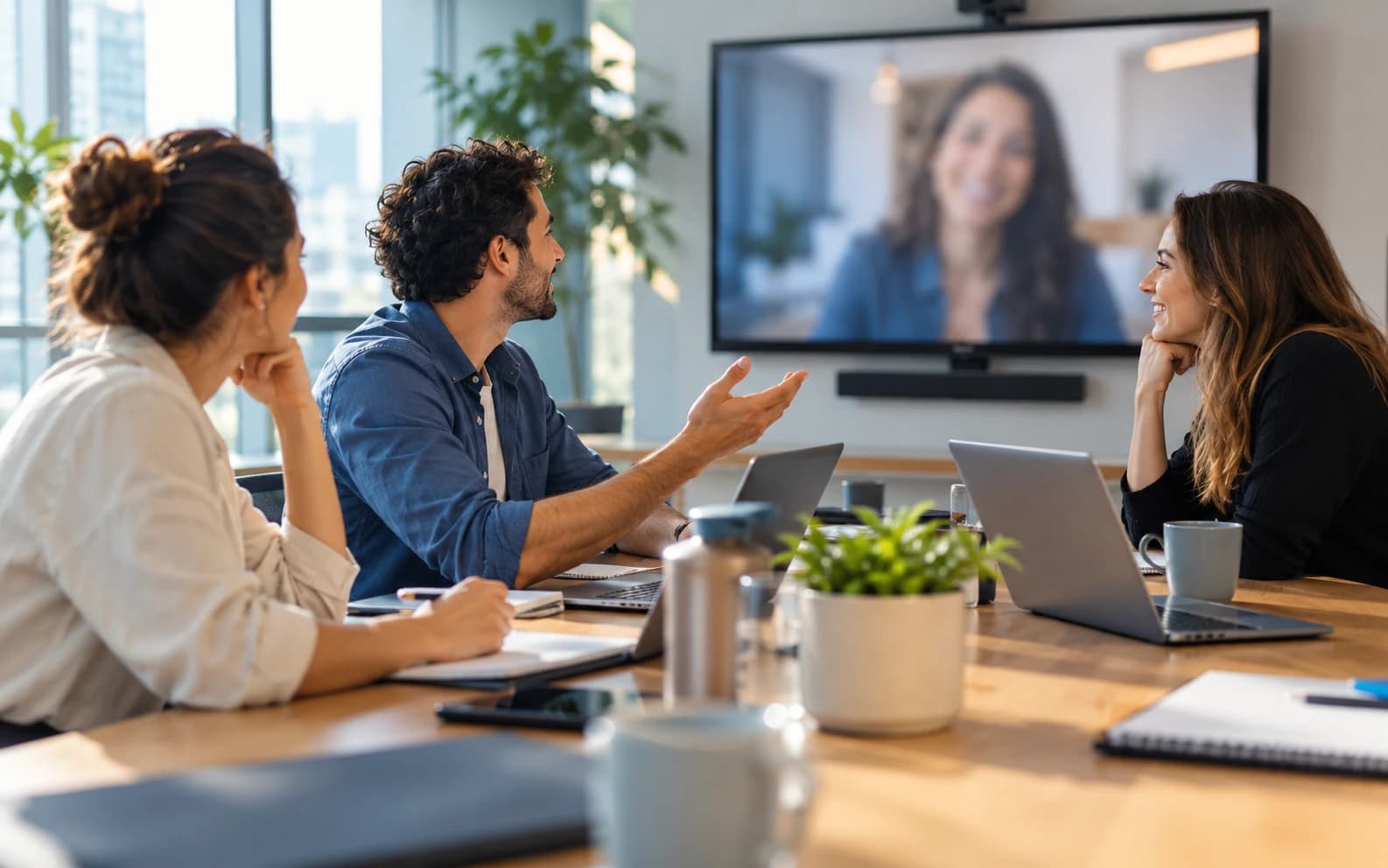
After our post on 2021 Learning & Development Trends, we wanted to take a look at workplace trends as well, drawing on the "Glassdoor Workplace Trends 2021" report, along with the changes that await us in our working lives in the near future.
Will COVID-19 Have a Lasting Impact on Hiring and Workplace Culture in 2021 and Beyond?
Here is a simple fact. Around the world, the pandemic has dramatically changed both current needs and future expectations across a wide range of areas: workplace trends and work culture above all, but also recruitment, compensation, performance management, retention, learning & development, and diversity and inclusion.
Many companies switched to working from home overnight, and for most of them this was something that had been discussed and evaluated many times before the pandemic but never actually implemented. Then something happened, and our working lives entered a major transformation. For roughly 9–10 months now, the whole world has been navigating this change. What is more, its impact is not limited to workplaces or the way we work; it continues to deeply affect economies worldwide, and 2021 will in fact be the year in which we experience these economic effects much more closely.
This post was written to share insights and trends, based on Glassdoor data, about what may happen in offices and working arrangements from here on, and to contribute, however modestly, to the awareness needed "to guard against the risks they create and to build better workplaces in the future." I hope it proves useful to those interested.
So let's get started😊
Trend 1: Office Life Will Return, but It Will Never Be the Same.
In 2020, millions of people are working from home. However, once COVID-19 is under control, most are expected to return to in-person workplaces, at least part-time.
In 2021, we will see employees splitting their time between home and the office become a more common workplace policy. There is no forecast along the lines of the "from now on everyone will work from home and offices will disappear entirely" claim we hear so often these days. At least in the short term, an in-between period is expected, and it is being called "hybrid working." In short, working life will continue in a mixed structure, sometimes from home and sometimes from the office.
So What Won't Be the Same, and Where Will We Struggle?
The remote working model does have cost advantages for companies. Lunches, shuttle services and other expenses are reduced. But on the other hand, we should not ignore the challenges and burdens that remote work brings.
With remote working, we lose a very important need and resource. Communication and bonds with our colleagues weaken considerably. Even when measures are taken to prevent this, and technological applications and digital infrastructure are put to use, at certain points no technology can replace "face-to-face, mutual, personal communication," in other words, "interaction."
An additional note: Before the pandemic, major brands such as IBM, Yahoo, Aetna, Bank of America, AT&T and Reddit, which tested this model extensively and over a long period, listed its downsides as "low motivation, lack of performance, and low creativity and innovation," in addition to "weak employee communication." The observations of those who have been through it are always valuable, which is why I wanted to include this.
In a model where we return to the office on a rotating basis, these bonds will certainly grow stronger again during office periods, but we have to accept that, even if we wanted to, things can no longer be the way they were☹
We have learned that being in the office was never just about being in the office. Going out to lunch with teammates, even if we were still talking about work, turned out to be a very valuable opportunity to socialize. Being (and being able to be) in the office turned out to be a very important resource that meets many of our human needs, such as socializing, communication, finding meaning, feeling good, sharing, collaboration, exchanging experiences, learning from one another, enjoying time together and emotional fulfillment, things we did not really notice or appreciate while we had them.
As I write this, it is December 22, 2020, nine days before New Year's. In the WA-HR group I am a member of, we are currently searching together for an answer to the question "What can we do on New Year's to make employees feel good at home?", and the dominant sentiment in the messages is how hard remote working is.
Before the pandemic, flexible and remote models were something everyone wanted under normal circumstances and always asked about when choosing a job. Yet when they become constant and mandatory, they seem to lose their "glittering appeal." I wonder if you agree?
There is one more point we must address: the situation of women.
These 10 months have been a truly difficult period for women in particular, who were hit hardest by remote working and who feel almost "burned out," both psychologically and physically. Women, who unfortunately have had to (and still have to) take on more of the housework, childcare and children's schooling than men, have, we could say, passed a real test of "resilience." According to a survey Deloitte conducted with more than 400 women in 9 countries to "understand the impact of the pandemic on working women," 82% of respondents say the pandemic has negatively affected their lives and their well-being, that is, their state of "being well and feeling well." You can find the report online and read it in detail. But in my view even this single data point tells us a great deal, and employers have a lot of work to do from here on. In this respect, I believe whatever is needed to lighten the load on women employees should be done. Because this issue matters a great deal to me, I did not want to move on without emphasizing it.
Now for the Really Important Question: What Do Employees Want?
According to Glassdoor's survey on "the ideal post-COVID-19 working arrangement":
- 70.1% of employees say they want to split their time between working from home and the office, meaning they prefer a mixed model.
- 26.4% say they prefer to work fully remotely, while
- Only 3.5% want to return to the office full-time.
As this data shows, the vast majority of employees want to be neither fully at home nor fully in the office. They prefer a hybrid approach with the flexibility to divide their time between the office and home. This will be the main model shaping the period ahead.
While we are on the subject of working arrangement preferences, I would like to share one more very recent data point:
This is the statistic that stuck with me most from the "PWC - Workforce of the Future - The competing forces shaping 2030" report published in October 2020.
In 2030, the number of US workers in "full-time, permanent" employment will correspond to 9% of the total workforce, the lowest level of all time.
In other words, 10 years from now, 91 out of every 100 workers in the US will not be working in a full-time job. They will choose different working models and arrangements. To me, this shows the following. Right now, we are discussing where our working arrangements will take shape in terms of location. That is certainly very important. But the real topic we will debate over the next 5–10 years will be the complete transformation of how we work and get things done. After the shift in work locations, the truly disruptive change will come in working models. Based on this data, let's leave here, for now, the forecast that the full-time working model will give way to part-time, project-based and freelance models. We will certainly discuss it in more detail when the time comes.
Trend 2: On Diversity and Inclusion, Employees Now Expect Progress, Not Just Commitments.
This trend may be perceived as somewhat more tied to the American reality. The Black Lives Matter movement this summer added a new dimension to racial inequality, and people now want to see not just words but action and progress.
For example, 1 in 3 job seekers in the US (32%) say they do not apply to companies that do not support workforce diversity. Diversity and inclusion is already a very important and topical issue. In 2021, it will continue on its path, now incorporating equality in working life as well. Transparent management, an approach that prioritizes diversity and inclusion in all internal policies and practices (recruitment above all), and timely, open reporting on what has been done are among the first steps that need to be taken.
In Turkey, too, we are seeing companies gradually become aware of this issue and start taking action. But compared with the US and Europe, we have a long way to go. Our hope is that practices supporting diversity in the workplace will become much more widespread in our country in 2021 and beyond.
Trend 3: Pay Policies Are Getting a Permanent WFH (Work From Home) Revision.
You might think this is another trend that only applies to the US, and I might have thought the same had I not come across an economist's comments on Bloomberg about 10 days ago. Let's first talk about the situation in the US, and then take a look at ourselves.
Here is the situation: Millions of people in the US will continue to work from home, and in a period when the cost of living is very high and time spent at home will increase after the pandemic (there is also a forecast that other viruses will threaten us in the years to come), a "move back" is expected from "expensive megacities" to smaller, safer cities where life is cheaper. In short, cities like New York and San Francisco will no longer be as popular "for living and working" as they used to be.
Naturally, this will be reflected in salaries as well. As large companies open hubs in smaller states (Oracle took the first step here, announcing last week that it will move its headquarters to Texas), people working in these locations will see negative changes in their pay of between 5% and 30% compared with before, because of "local cost of living," the main determining factor in salaries. In other words, salaries will decrease by a certain amount for those living in cities where life is cheaper.
I don't think this is an easy topic to manage, because there are other factors that determine pay. There can be many parameters: the competitive landscape, market data, the criticality of the work and the role (especially for technical and digital roles), the state of the supply market, the value created, and so on. I believe this could be an approach that is quite hard to manage, one where all of these need to be looked at and evaluated together.
Looking at it from Turkey's perspective, I heard a forecast that over the next 1–2 years, large companies might likewise move their headquarters from big cities to smaller ones, and that people working in Istanbul would accept lower salaries because of the competition that also exists in smaller cities. The commentary even suggested that people would accept "working for less pay just to escape the metropolises." We shall wait and see😊
Trend 4: Even the Best Company Cultures Need to Adapt to the New Realities of the Post-COVID-19 Era.
Personally, I think this trend "sits at a very critical point" in terms of shaping HR's new agenda going forward. Here, I wanted to group the issues that need to adapt to the new reality and must be revisited under 3 main areas of focus.
- Corporate Identity and Employer Brand:
After COVID-19, it will be an absolute necessity for companies to review their "corporate identity and employer brand." Some have not even waited until after the pandemic and are doing it during the pandemic. The key starting point here is how you have shown your sensitivity to the concerns of your employees first, and then of everyone else, in other words all of your customers, and how this has been perceived on the other side throughout this whole process.
Many major brands either suffered serious damage or moved up a level in this regard. If you have not yet taken a look at this as an employer, it is extremely important to start as soon as possible, identify what needs to change and be done, and move forward accordingly.
- Employee Happiness and Well-Being Practices:
Companies that do not show due care and attention to their employees' concerns, health and happiness are losing points. From here on, concepts we have measured for many years, such as employee satisfaction and employee engagement, will give way to "Employee Happiness." Because we cannot make people engaged if we cannot make them happy. How sweet that we will now be measuring "happiness"😊 and, in parallel, well-being practices (initiatives focused on wellness, being well and health) will come to the fore in companies.
- Building Culture Without an Office:
This is a topic I care about a great deal. What has the pandemic shown us? It turns out that companies don't really need big, huge offices or massive campuses to build a culture. Because one day comes when, even if we have the most beautiful offices, the possibility of going there to work can disappear.
Yes, I do believe effective office environments are certainly important for creating a positive feeling, a strong sense of trust and lasting engagement among employees. But where we stand today points all of us toward a different reality: the need to be able to build a culture without offices from here on. We can say this very clearly. The companies that succeed in the future will be those able to create and practice an office-independent corporate culture.
I am talking about something quite difficult. It is already hard enough to build an owned, effective corporate culture or create employee engagement even when interacting face to face in an office. Doing all of this while working apart in hybrid models, where communication and team bonds are weaker than before, will be truly challenging for all of us.
On the other hand, there is some good news too. The report identifies 3 important factors that affect employee satisfaction and engagement, and none of them is related to physically maintaining offices. If you ask what they are:
- Being able to create a growing "social benefit," which requires the company to have a transparent and as open a mission as possible. In other words, from now on employees will demand, far more than before, to see and know what their work serves, exactly where they fit into that "big picture" we have been talking about and repeating for years, and what kind of benefit they create. I think this is exactly where the pandemic has had a very serious awakening effect, because over the last 9 months, haven't we all been searching hard for answers to questions like what are we doing? / why are we doing it? / what are we working for? / what kind of benefit are we creating? We will now want to see the answers to these questions right in front of us in our working lives too. You could also call it collective consciousness 😊
- Empathetic and inspiring leaders are coming to the fore. With the pandemic, leadership approaches are another area being reconsidered. I covered this in my earlier post "New Generation Leadership Approaches," which you are welcome to read. With the pandemic, our need has grown even further for leaders who can approach their employees in the right way when they need it, who lead with transparency and empathy, who always put human values first, and who emphasize collaboration and "achieving together," in short, leaders who can meet their employees' needs first. I hope the number of such leaders keeps growing. During the pandemic we worked, looked after children and cooked, all at home. I have many memories from this period of trying to juggle 3–4 things at once. Who doesn't? Our roles had never overlapped this much. In such a complex and psychologically demanding period, what would we have done without managers who understood us and were aware of our needs and what we were going through? Just think about it 😊 I did, and I said thank goodness I am my own manager. Because I believe we have a long way to go here as well.
- Finally, employees having clearly and explicitly defined career opportunities, and being supported along that path, is listed as the 3rd factor that positively affects employee satisfaction. For now, we can rest easy: none of these 3 areas is directly among the "factors that would be negatively affected by not being in the office." But that is not the end of it. We still need to keep in the back of our minds, for the times when we are away from the office and may be again in the years ahead, the question of what we can do better and where our opportunities might lie. Being in HR really is a tough job 😊
Trend 5: After COVID-19 Ends, There Will Be Jobs and Professions That Never Come Back.
Finally, there is a reality we have all been hearing about in the news for a while and come across every time we open LinkedIn. Yes, the pandemic has caused some professions and jobs to come to an end, and more will follow.
If you ask which jobs these are, jobs in the service sector in particular, face-to-face sales and marketing roles, office tasks and similar work face the danger of not returning to their old ways even after the pandemic ends; in other words, they are at high risk.
In my view, the real question here is what policies countries will pursue and what kinds of measures they will take for these at-risk professions and the people working in them. The pandemic is not over yet, and I think we will feel these kinds of economic and social effects much more deeply all over the world in 2021.
As we slowly come to the end:
2020 was an unexpected and "very difficult" year for all of us. A global pandemic, a severe economic downturn and widespread unease caused by uncertainty surrounded us on all sides. Because we have generally been living through unusual things, making predictions or forecasts about what will happen in 2021 is, in my view, quite difficult, even when based on data.
But there are 2 things that are certain.
Even though 2021 will be the year when things start to improve in terms of the pandemic, it will still not be an easy year economically and socially. Economic recoveries may come, but the data says the pandemic's negative impact on economies worldwide will continue until the end of 2022.
On the other hand, the world of work and business models are facing a turning point. 2021 will be the year when we feel this turning point much more closely, and perhaps the year we make the turn.
My wish is that all of us (companies, employers, employees, consultants) focus on creating the models we want to work in in the future, and on seeing, understanding and recognizing what is better for the collective. I think that is what we need most😊
For the current agenda, take a look at our post on employee engagement trends 2027.
I wish everyone a joyful year full of health and happiness.
Until we meet again in new posts in 2021.